

Hantavirus and Your Program: What Early Childhood Professionals Need to Know

By Andy Roszak, JD, MPA, EMT/Paramedic Founder, Institute for Childhood Preparedness
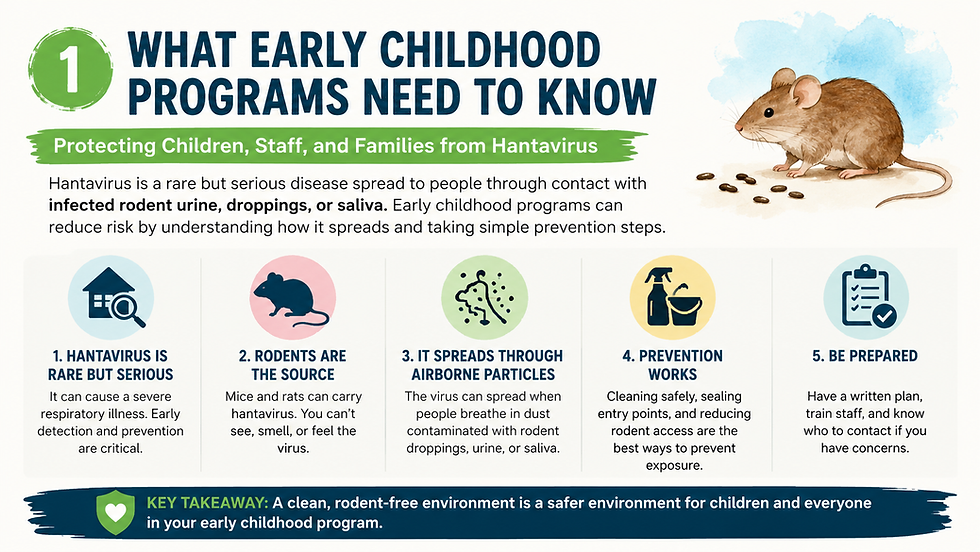
If you have been watching the news this month, you have probably seen the word "hantavirus" more than once. A cluster of cases on a cruise ship in the Atlantic has put it back on the public radar, and providers in our network are asking what it means for their classrooms. That is exactly the right instinct. When something new shows up, ask questions, get the facts, and then act calmly.
Over my years in public health, including time at the National Association of County and City Health Officials (NACCHO), the Illinois Department of Public Health, and as a senior member of HHS, I have seen a lot of headlines come and go. The pattern is almost always the same. A story breaks. People worry. Then the facts catch up to the fear, and the response settles into the same boring, dependable practices that already protect our children every day. Hantavirus is no different. Let me walk you through what it is, what it is not, and what early childhood programs should actually do.
What Hantavirus Is, in Plain Language
Hantavirus is a family of viruses carried mainly by rodents, like mice and rats. In the United States, when a person gets sick from hantavirus, it usually shows up as something called Hantavirus Pulmonary Syndrome, or HPS. That is a fancy name for a serious lung illness. People get sick, in almost every case, after breathing in tiny particles from rodent droppings, urine, or nesting material that have been stirred up into the air.
Here is the part people often miss. Hantavirus in this country is rare. Since the disease was first identified in 1993, fewer than 900 cases have been reported nationwide. We see only about 20 to 40 cases each year, and more than 9 in 10 of those happen west of the Mississippi River. Children make up a very small share of cases. Fewer than 7 percent of HPS cases involve people under age 17. Cases in children under 10 are even rarer.
I share those numbers not to make you feel safe and stop reading, but to give you a clear picture before we talk about prevention. Real preparedness sits on top of accurate information, not on top of a feeling.
Why It Is in the News Right Now
In early May 2026, the CDC reported a cluster of hantavirus cases tied to a cruise ship called the MV Hondius. The strain involved is the Andes virus, which is found mostly in South America. As of the most recent update, there were 11 reported cases and 3 deaths in the cluster. About three dozen U.S. residents who were on the ship were brought back to the United States and placed under medical observation in Nebraska and Atlanta.
Two details matter here. First, the CDC has been clear that the risk to the general public in the United States is extremely low. Second, the Andes strain is the only known hantavirus that can spread from person to person, and only through close, prolonged contact. That is why the CDC is monitoring the exposed passengers carefully. It is not the same situation as a typical U.S. case, which almost always traces back to rodents in a building, not another person.
For an early childhood program, that means the cruise ship story is interesting and worth understanding, but it is not what should drive your decisions. What should drive your decisions is the much more familiar issue of rodents in and around your facility.
How People Actually Get Sick
The most common way a person catches hantavirus in this country is by breathing in the virus from disturbed rodent waste. That usually happens in enclosed spaces with poor airflow, like a shed, a basement, a storage closet, an attic, or any room that has been closed up for a while. Someone walks in, starts sweeping or vacuuming, and stirs the contaminated material into the air without realizing it. The virus is then inhaled.

Less commonly, a person can be exposed by touching contaminated surfaces and then their eyes, nose, or mouth, or by being bitten by an infected rodent. These routes are rare, but worth knowing.
Person to person spread, as I mentioned, is not a feature of the strains found in U.S. rodents. So your daily worry should not be whether a child or coworker can give it to someone else in the classroom. Your worry should be whether your building has a rodent problem you have not noticed yet.
Symptoms to Recognize
If someone is going to get sick from hantavirus, symptoms usually start two to three weeks after exposure, although it can take as long as eight weeks. The early signs look like a lot of other illnesses, which is part of what makes this disease tricky. People run a fever, get chills, and feel deep muscle aches, especially in the thighs, hips, and lower back. They often have headaches and fatigue. About half also have stomach symptoms like nausea, vomiting, or belly pain.
Four to ten days later, a second phase can begin. The lungs start to fill with fluid. The person develops a cough and shortness of breath. This is the dangerous phase, and it is the reason any suspected exposure should be taken seriously. If you, a staff member, or a family member is sick and there is any chance of recent rodent exposure, the most important step is to tell the doctor about that exposure. Early identification changes outcomes.
What Your Program Should Actually Do

Here is the practical part. None of this is exotic. It is the same kind of facility hygiene and pest management you should already have in place. Hantavirus just sharpens the reason behind it.
Walk your building. Look for gaps larger than a quarter inch around doors, windows, vents, pipes, and the foundation. Seal them. Mice can squeeze through openings the size of a dime. Pay close attention to storage sheds, outbuildings, and anywhere you keep supplies between uses.
Store food in containers with tight lids. That includes children's snacks, staff lunches, classroom pet food, art supplies that smell like food, and outdoor bird seed if you have a feeder. Take garbage out daily and use cans with tight fitting lids.
If you ever see droppings, do not sweep them and do not vacuum. Sweeping and vacuuming sends the particles right into the air you are about to breathe. Instead, open the windows and doors and let the space air out for at least 30 minutes. Then put on gloves and a mask. Mix a solution of one part bleach to nine parts water, or use an EPA approved disinfectant. Spray the area until it is wet and let it soak for five to ten minutes. Wipe it up with paper towels, double bag the waste, and wash your hands thoroughly when you are done.
Never assign this cleaning to a teacher between activities or during nap. It deserves a real moment, real protective equipment, and the right materials. Many programs find it easier to call their pest management company for anything more than a small, fresh sighting.
After any extended closure, whether that is summer break, winter holidays, or a long weekend, treat your first walkthrough as if rodents may have moved in while you were away. Open the building, air it out, and inspect every storage area before children arrive.
Finally, train your whole team. Every staff member should know who to call when they see rodent evidence, what to touch, and what to leave alone. Add hantavirus to the annual emergency preparedness refresher you are already doing. If you are not doing one, this is a good year to start.
The Bigger Picture
Hantavirus is one item on a list that keeps growing. Over the past few years, early childhood programs have absorbed pandemic response, severe weather events, supply chain interruptions, and new conversations about everything from air quality to mental health.

Each event reinforces the same lesson. Programs that maintain a steady culture of safety do not panic when the next headline arrives. They check the building. They brief the team. They communicate with families. They keep teaching children.
So here is my ask. Read up on hantavirus enough to feel confident answering a parent's question. Walk your building this week with fresh eyes. Refresh your cleaning protocols and your pest management contract. Then go back to what you do best, which is creating safe and joyful places for children to learn.
That is what preparedness looks like in practice. Calm, informed, and ready for whatever shows up next.
Andy Roszak leads the Institute for Childhood Preparedness, which provides emergency preparedness training and resources for early childhood programs nationwide. Learn more at childhoodpreparedness.org.
Sources used in preparing this article: CDC, About Hantavirus and Hantavirus Prevention pages, cdc.gov/hantavirus CDC, Andes Virus Outbreak on a Cruise Ship: Current Situation, May 2026 CDC Health Alert Network, 2026 Multi-country Hantavirus Cluster Linked to Cruise Ship American Academy of Pediatrics, Hantavirus Pulmonary Syndrome 1993 to 2018, Pediatrics HealthyChildren.org, Hantavirus: Causes, Symptoms, Spread and Prevention


